
Home Improvement Scams: How to Stay Safe and Avoid Costly Mistakes
A friendly stranger knocks on your door after a storm. They noticed loose shingles, have materials left over from a job down the street, and can start tomorrow if you pay cash today.
That’s how many home improvement scams begin. The sections below cover the most common scams, the red flags the FTC lists, and what consumer protection laws can require of contractors. The last part is a five-step check to run on any contractor before you sign a contract or pay anything.
What Are the Most Common Home Improvement Scams?
Quick answer: The most common home improvement scams involve door-to-door contractors, demands for large payments up front, lowball bids followed by surprise charges, and high-pressure deals. Protect yourself by hiring licensed, insured contractors, getting several written estimates, and signing a detailed contract. Never pay in full before the work is done.
| Scam | How it works | Red flag | How to protect yourself |
|---|---|---|---|
| Storm chaser | Crews show up after bad weather offering fast repairs | Unmarked truck, out-of-state plates, “today only” price | Get local references and verify the license |
| Leftover materials | A “discount” using materials from a nearby job | Pressure to decide on the spot | Get written estimates from several contractors |
| Big deposit, no work | Contractor takes a large payment and disappears | Cash only, or full payment up front | Pay in stages tied to finished work |
| Lowball bid | A cheap quote grows with change orders | Vague scope, no line items | Insist on a detailed written scope and price |
| Fake inspection | “Inspector” finds urgent, expensive problems | Damage appears during the inspection | Get a second opinion before agreeing |
| Financing trap | Contractor steers you to a lender they know | Pressure to sign loan papers quickly | Arrange your own financing and read everything |
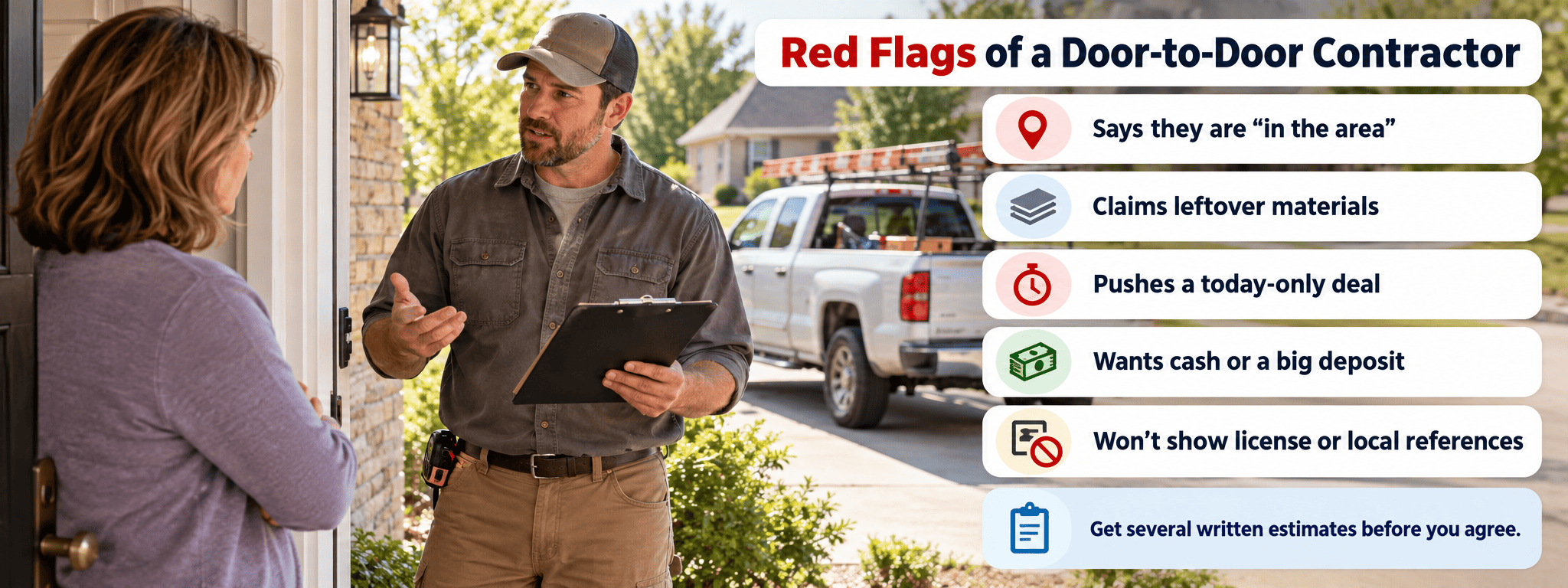
Red Flags of Home Improvement Fraud
The FTC’s guide on how to avoid a home improvement scam lists tactics dishonest contractors use again and again. Be cautious if a contractor:
- Knocks on your door because they’re “in the area”
- Says they have materials left over from another job
- Pressures you to decide immediately
- Wants full payment up front or accepts only cash
- Asks you to pull the building permits yourself
- Suggests you borrow money from a lender they know
Home improvement fraud can also include altering a contract without your consent, damaging property to create work, or pretending to work for a utility or government agency.
Pro tip: Search the company name along with words like “scam,” “complaint,” or “review” before you call back. Complaints from other homeowners often show up on the first page of results.
What Does a Home Improvement Consumer Protection Act Cover?
Many states have laws that protect homeowners who hire contractors. Pennsylvania’s Home Improvement Consumer Protection Act is a clear example of what these laws can include. According to the Pennsylvania Attorney General’s consumer brochure:
- Contractors who do $5,000 or more in home improvements per year must register with the state.
- Contracts must be in writing when the price of the work exceeds $500.
- Homeowners can cancel a home improvement contract within three business days of signing, except in emergencies.
- A contractor can’t demand or receive payment before the contract is signed.
Rules vary by state. Check your state attorney general or consumer protection office to learn what licensing, registration, and contract rules apply where you live.
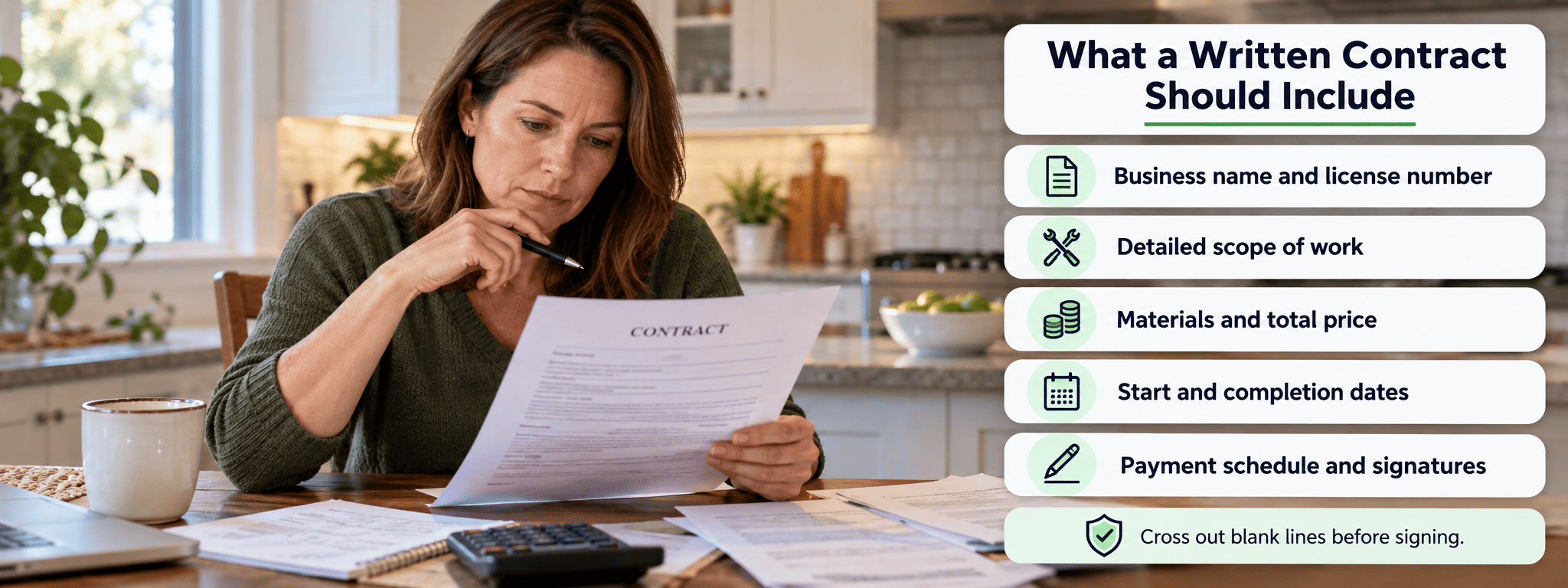
How to Vet a Contractor Before You Sign
Step 1: Verify the license or registration
Look up the contractor’s license or registration number with your state or county. Make sure the business name on the license matches the name on the estimate.
Step 2: Confirm insurance
Ask for proof of liability insurance and workers’ compensation coverage. Without it, you could be responsible if someone gets hurt on your property.
Step 3: Compare several written estimates
Compare estimates for the same scope of work. If one bid is far lower than the others, ask what’s missing. Our tips on how to find a good contractor and avoid a bad one walk through what to compare.
Step 4: Read the contract carefully
A solid contract lists the contractor’s contact details and license number, a detailed description of work and materials, start and completion dates, the total price, and the payment schedule. Fill in or cross out every blank line before you sign.
Step 5: Pay in stages
Tie payments to finished milestones, and pay by check or credit card so you have a record. Make the final payment only after the work is complete and passes inspection.
What to Do If You’ve Been Scammed
If a contractor scams you, act quickly: stop payments, document everything, complain in writing, and report it to your state and the FTC.
- Stop payments. Contact your bank or card issuer right away about any pending charges.
- Document everything. Save the contract, receipts, texts, emails, and photos of the work.
- Put your complaint in writing. Send it to the contractor and keep a copy.
- Report it. Contact your state attorney general or consumer protection office, and report fraud to the FTC.
- Warn others. Share your experience in honest online reviews so neighbors can avoid the same contractor.
The same warning signs apply to specialized trades. Our list of signs your electrician is a scam covers red flags for electrical work.
DIY or Hire a Pro?
Good DIY project if…
- It’s a small cosmetic job like painting or replacing hardware
- No permit or inspection is required
- A mistake would be cheap to fix
Call a pro if…
- The work needs a permit, such as electrical, plumbing, roofing, or structural changes
- The project is large enough to require a written contract in your state
- Your insurance or mortgage requires licensed work
- Safety risks are involved, like heights, gas lines, or live wiring
Knowing typical prices helps you spot a bid that’s too good to be true. Check the HireRush home remodeling cost guide before comparing quotes.
Common Mistakes to Avoid
- Relying on a handshake. Verbal promises are hard to enforce. Get everything in writing.
- Paying cash. Cash leaves no paper trail if something goes wrong.
- Signing blank or rushed paperwork. Read every page, and never sign a document with empty spaces.
- Skipping permits to save money. Unpermitted work can cause problems with insurance claims and when you sell.
- Choosing the lowest bid automatically. A much lower price often means missing work, cheap materials, or surprise charges later.
- Making the final payment too early. Once you’ve paid in full, you lose most of your leverage.
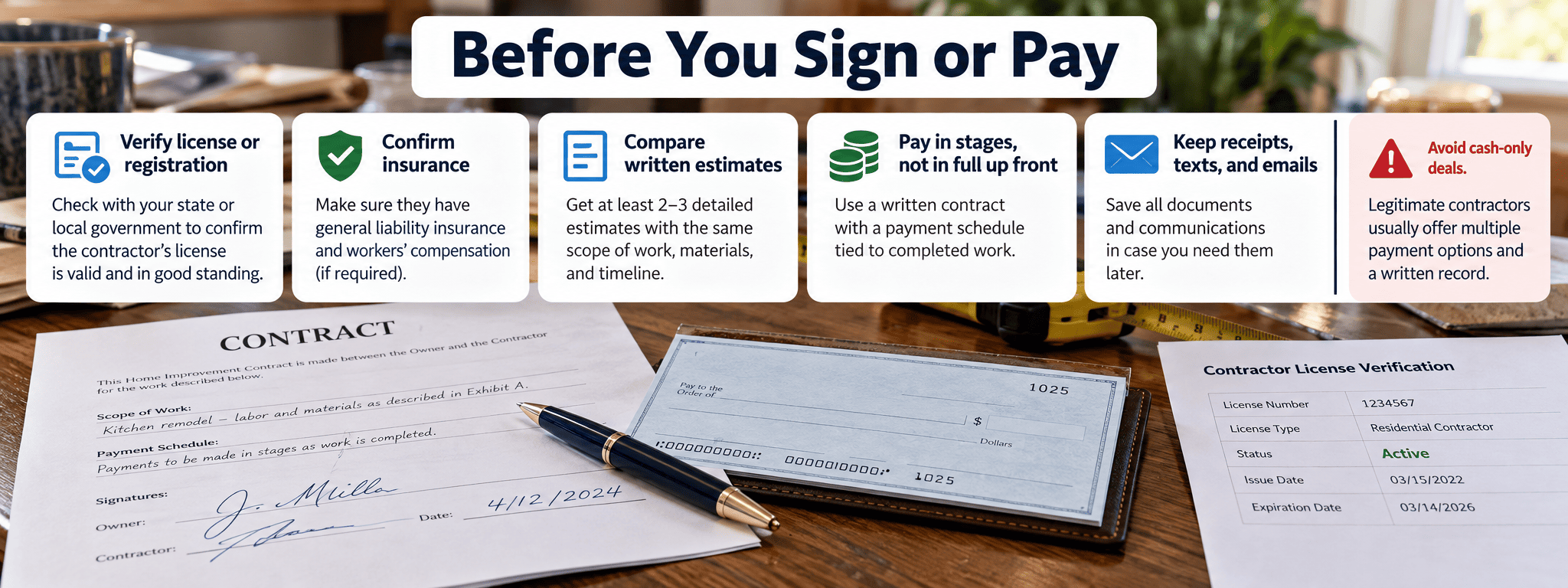
Final Thoughts
Home improvement scams tend to rely on pressure, cash, and vague promises. Watch for door-to-door offers, big deposits, lowball bids, and contractors who avoid permits.
Protect yourself with a licensed, insured contractor, several written estimates, a detailed contract, and payments tied to finished work. If something goes wrong, document everything and report it to your state consumer protection office. A few careful checks before you sign are your best protection.