
Signs Your Roof Needs Repair: What to Look For
After a windy night, you find two shingles on the lawn. A week later, a brown ring the size of a dinner plate shows up on the bedroom ceiling, and it grows a little after every rain.
The signs your roof needs repair usually show up in three places: on the roof surface, in the gutters, and inside the attic. The sections below show what to look for in each spot without climbing onto the roof.
You’ll also see how to trace a leak to its source, what to do while water is coming in, and when a repair stops making sense compared with a new roof.
What Are the Signs Your Roof Needs Repair?
Quick answer: The main signs are missing, cracked, or curling shingles, granules collecting in the gutters, and damaged flashing around chimneys and vents. Inside, look for ceiling stains, damp attic insulation, and daylight through the roof boards. A sagging roofline or an active leak during rain needs a roofer right away.
Each sign points to a different part of the roof:
| Sign | Where to look | What it usually means | Next step |
|---|---|---|---|
| Missing or cracked shingles | Roof surface, lawn after a storm | Wind or impact damage; the roof deck may be exposed | Book a repair before the next rain |
| Curling or bald shingles, granules in gutters | Roof surface, gutters, downspout outlets | Shingles wearing out with age | Get an inspection and ask about remaining life |
| Lifted or rusted flashing | Around the chimney, vents, skylights, and walls | Water getting in at a joint | Have the flashing resealed or replaced |
| Ceiling or wall stains | Upper-floor rooms, closets | An active or past leak | Check the attic, then call a roofer |
| Daylight or wet wood in the attic | Underside of the roof deck | A hole, gap, or failed seal | Mark the spot and schedule a repair |
| Sagging roofline | Ridge and roof planes, seen from the street | Possible structural or deck damage | Call a roofer promptly |
Quick Checks From the Ground and the Attic
The National Roofing Contractors Association advises homeowners to inspect their roof only from ground level, because the risk of falling is too great without proper safety systems. You can learn a lot without leaving the yard:
- Scan with binoculars. Walk around the house and look for gaps in the shingle rows, dark patches, curled edges, and bent flashing.
- Check the gutters. Piles of coarse, sand-like granules at the downspout outlets point to shingle wear.
- Look at the roofline. A straight ridge should look straight. A dip or wave can mean the deck underneath is weakening.
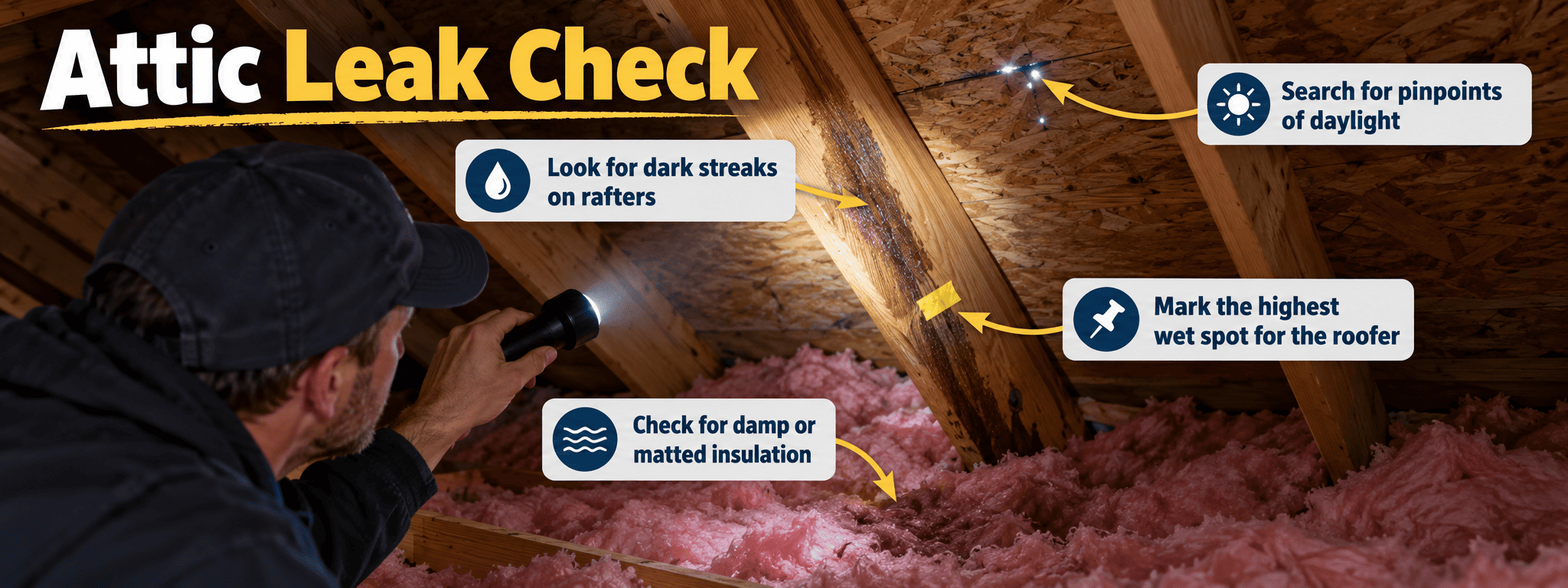
- Visit the attic on a sunny day. Turn off the light and look for pinpoints of daylight through the roof boards.
- Visit it again during or after rain. Use a flashlight to check for drips, dark streaks on rafters, and damp or matted insulation.
Not every wet attic is a roof leak. Frost or water droplets on nail tips in cold weather usually point to condensation from poor ventilation. Our article on attic ventilation and how to improve it explains how to tell the difference and what fixes it.
How to Find Where a Roof Leak Starts
On a leaky roof, water rarely drips straight down from the hole. It enters at a weak point, runs along the roof deck or a rafter, and drops wherever gravity takes it. That’s why a ceiling stain can appear several feet away from the actual entry point.
Start at the stain and work uphill in the attic. Follow the wet trail on the rafters or roof boards toward the ridge until it stops. Common entry points include:
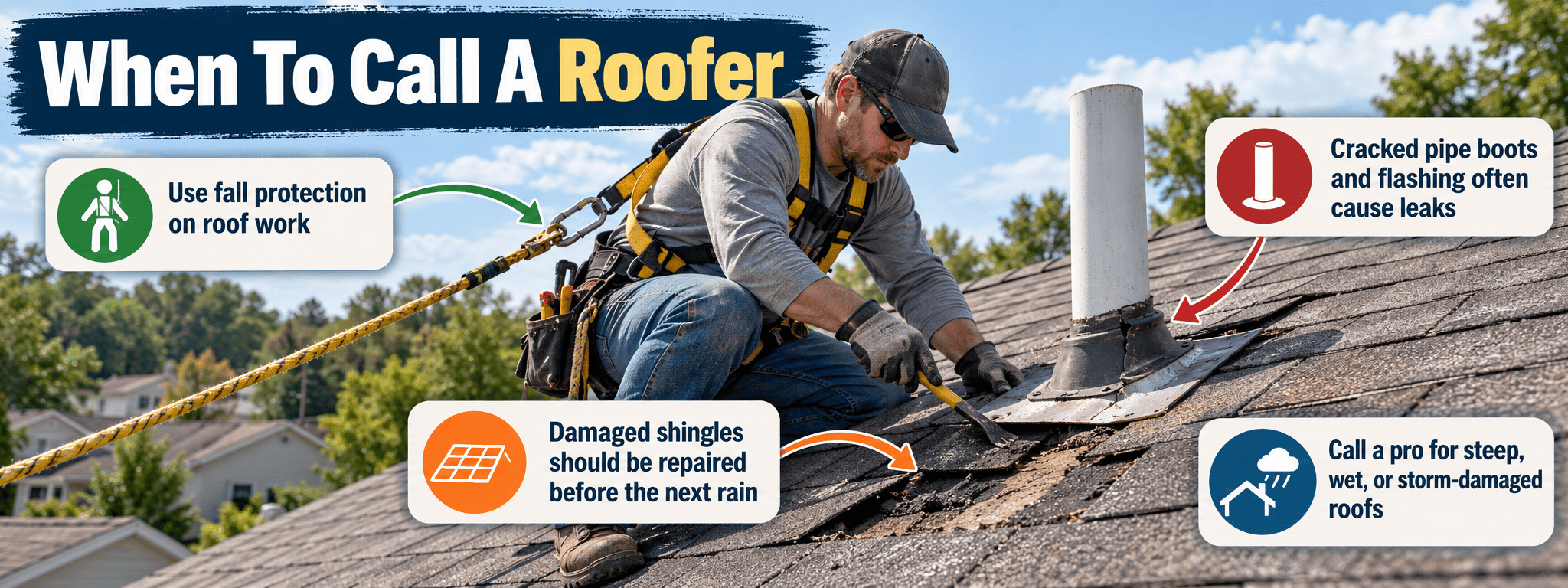
- Pipe boots: The rubber collar around a plumbing vent cracks with age and sun.
- Chimney flashing: Metal and sealant at the joint between brick and shingles separate over time.
- Skylights: Seals and flashing around the frame wear out.
- Valleys: Water from two roof planes meets here, so damaged shingles or flashing leak quickly.
- Eaves in cold climates: Ice that builds up at the roof edge can back water up under the shingles.
Mark the highest wet spot with tape, and measure its distance from an outside wall or the chimney. Those measurements help the roofer find the same spot from outside.
How to Repair a Roof Leak While Water Is Coming In
With a leaking roof, the permanent fix happens up top. Until a roofer gets there, these steps limit the damage inside.
Step 1: Protect the room
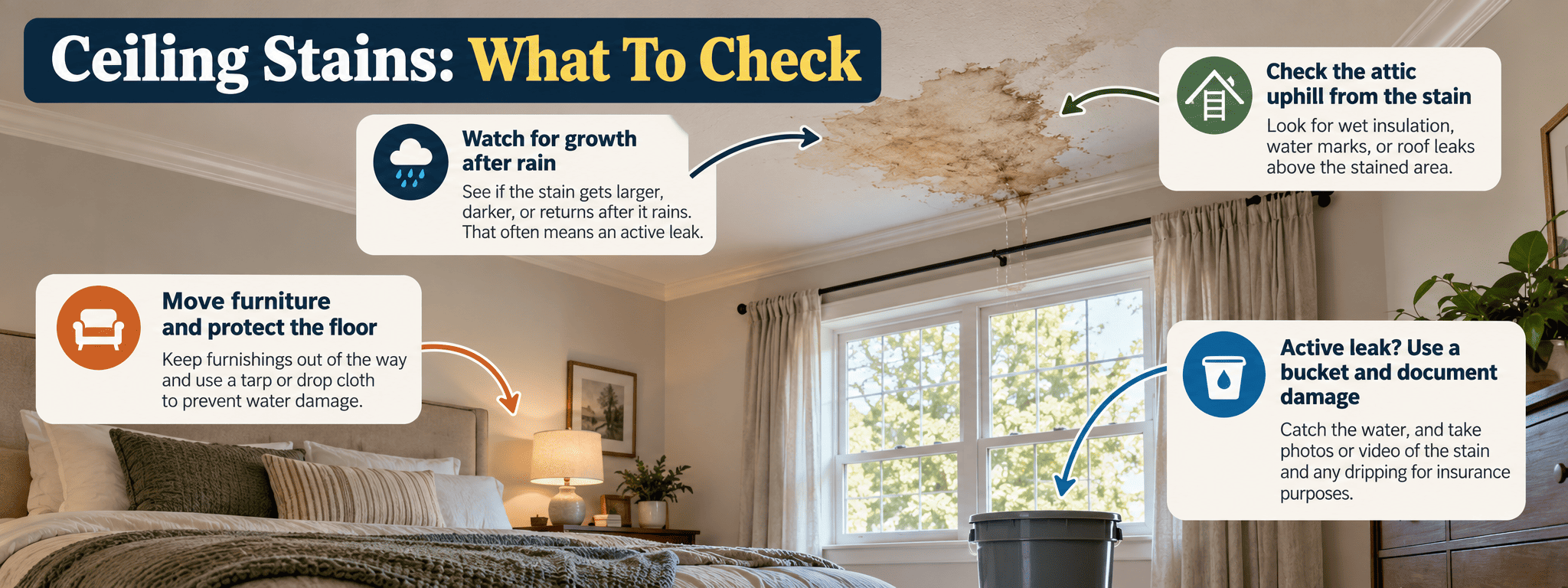
Move furniture and electronics away from the drip, and set a bucket or storage bin under it with a towel inside to stop splashing. Lay a plastic tarp over carpet or flooring around the bucket.
Step 2: Shut off power near the leak
If water is coming through a light fixture, ceiling fan, or near an outlet, turn off that circuit at the breaker panel. Don’t touch wet fixtures or switches.
Step 3: Drain a bulging ceiling
A ceiling that sags with trapped water can give way all at once. Put a bucket under the lowest point of the bulge, stand to one side, and poke a small hole there with a screwdriver so the water drains in a controlled stream. A small hole is easy to patch later.
Step 4: Stop water at the source in the attic
If you can reach the wet spot in the attic, place a bucket or a piece of plywood with a pan on top across the joists under the drip. Step only on joists, never on the drywall between them.
Step 5: Dry everything out
Run fans and a dehumidifier once the leak stops. Pull up and replace soaked insulation, which holds moisture against the drywall. Photograph the damage before you clean up, in case you file an insurance claim.
Pro tip: Write down the date, the weather, and where water appeared each time the roof leaks. A leak that shows up only with wind-driven rain from one direction points the roofer to a specific side of the house.
Can You Repair a Roof Yourself?
Some homeowners reseal a lifted shingle tab with roofing cement or replace a cracked pipe boot on a low, gently sloped roof. These are small jobs, but they still put you on a roof, and a fall can cause serious injury. On a steep, two-story, wet, or storm-damaged roof, leave the work to a roofer.
If you inspect gutters or eaves from a ladder, follow OSHA’s portable ladder safety rules. Set the base a quarter of the ladder’s working length out from the wall, extend the ladder at least 3 feet above the edge you’re stepping onto, and never stand on the top three rungs.
When Is a Roof Leak an Emergency?
Treat it as urgent and call a roofer if:
- Water is coming through a light fixture or near wiring
- A section of ceiling is sagging or cracking
- A storm tore off a large area of shingles or exposed the roof deck
- A tree or large limb hit the roof
- The roofline is visibly sagging
NRCA recommends a professional roof inspection as soon as possible after storm damage. Ask the roofer to tarp any exposed area until permanent repairs can be made.
Repair or Replace Your Roof?
A repair is usually the better choice when the damage is limited to one area, such as a few missing shingles, one failed pipe boot, or a section of flashing. The rest of the roof should still lie flat and hold its granules.
Replacement starts to make more sense when the problems are spread out. Watch for curling and bald shingles on several roof planes, leaks in more than one place, soft spots in the deck, or a roof that has already been patched many times. Ask the roofer to show you photos of what they found before you decide.
Roof Maintenance That Prevents Leaks
A few habits catch problems while they’re still small:
- Keep the gutters clear. Overflowing gutters push water against the fascia and roof edge. Our guide to rain gutter repair and seasonal maintenance covers leaks, sagging, and loose downspouts.
- Trim overhanging branches. Limbs scrape shingles in the wind, drop debris into valleys, and can fall in a storm.
- Check after every major storm. Do it from the ground and the attic, as described above.
- Keep the attic ventilated and insulated. Good airflow limits condensation and helps reduce ice buildup at the eaves in cold climates.
- Schedule regular professional inspections. A roofer can check flashing, seals, and the deck up close.
DIY or Hire a Pro?
Good DIY project if…
- You’re checking the roof from the ground or the attic
- You’re containing a leak and drying out the room
- You’re cleaning gutters from a properly set ladder on a single-story home
Call a pro if…
- Any repair requires walking on the roof
- The roof is steep, two stories or higher, or wet
- Flashing, valleys, or skylights are leaking
- You see sagging, soft decking, or widespread shingle wear
The division of work is clear: you inspect and protect, and a roofer goes up on the roof. Prices depend on pitch, material, and access, and the HireRush roof repair cost guide lists typical ranges.
Common Mistakes to Avoid
- Waiting for the next dry spell. Water keeps soaking insulation and framing between storms. Contain the leak and book a repair now.
- Patching the ceiling first. New drywall over an active leak gets ruined. Fix the roof, let the area dry, then repair the ceiling.
- Smearing sealant over everything. Caulk on top of failed flashing hides the problem for a season. Replace the flashing or pipe boot that failed.
- Pressure washing shingles. High pressure strips granules and can force water under the shingles. Use a roof cleaner or hire a pro for moss and algae.
- Climbing up during or right after rain. Wet shingles are slippery. Wait for a dry day, or let a roofer with fall protection handle it.
- Choosing the lowest storm-chaser bid. Crews that knock on doors after storms may disappear before the work is finished. Check local references and the contractor’s license and insurance.
Final Thoughts
The signs your roof needs repair show up in predictable places: missing or curling shingles, granules in the gutters, damaged flashing, ceiling stains, and daylight or wet wood in the attic.
Inspect from the ground and the attic, trace leaks uphill from the stain, and protect the room while water comes in. Repairs that require walking on the roof, along with sagging or widespread wear, belong to a roofing contractor.