You don’t need a five-figure renovation to make your home feel new. A fresh coat of paint, brighter lighting, or a sealed drafty door can change how a room looks and how your energy bill reads.
Home improvement on a budget works best when you spend on the right things in the right order. Below is a simple order of priorities, estimated costs and time for cheap upgrades, and a clear line between weekend DIY jobs and work worth paying a pro for.
How to Plan Home Improvement on a Budget
Quick answer: Start with repairs that prevent damage, then add upgrades that lower your monthly bills, and finish with cosmetic updates you’ll notice every day. Set a firm budget with a 10–20% cushion, do the simple projects yourself, and hire pros only for work that needs skill, tools, or a permit.
Sort your list into three groups before you buy anything:
- Fix what’s failing. Leaks, cracked caulk, loose railings, and peeling exterior paint get more expensive the longer you wait.
- Cut monthly costs. Sealing drafts and saving water pay you back every month.
- Refresh the look. Paint, hardware, and lighting change how a room looks for relatively little money.
Cheap Home Improvement Ideas and What They Cost
Most cheap home improvement ideas cost a few hundred dollars or less in materials. The figures below are estimates for DIY materials and time only; labor, region, brand, and room size change the total.
| Upgrade | Estimated DIY materials | Typical time | Difficulty | Best for |
|---|---|---|---|---|
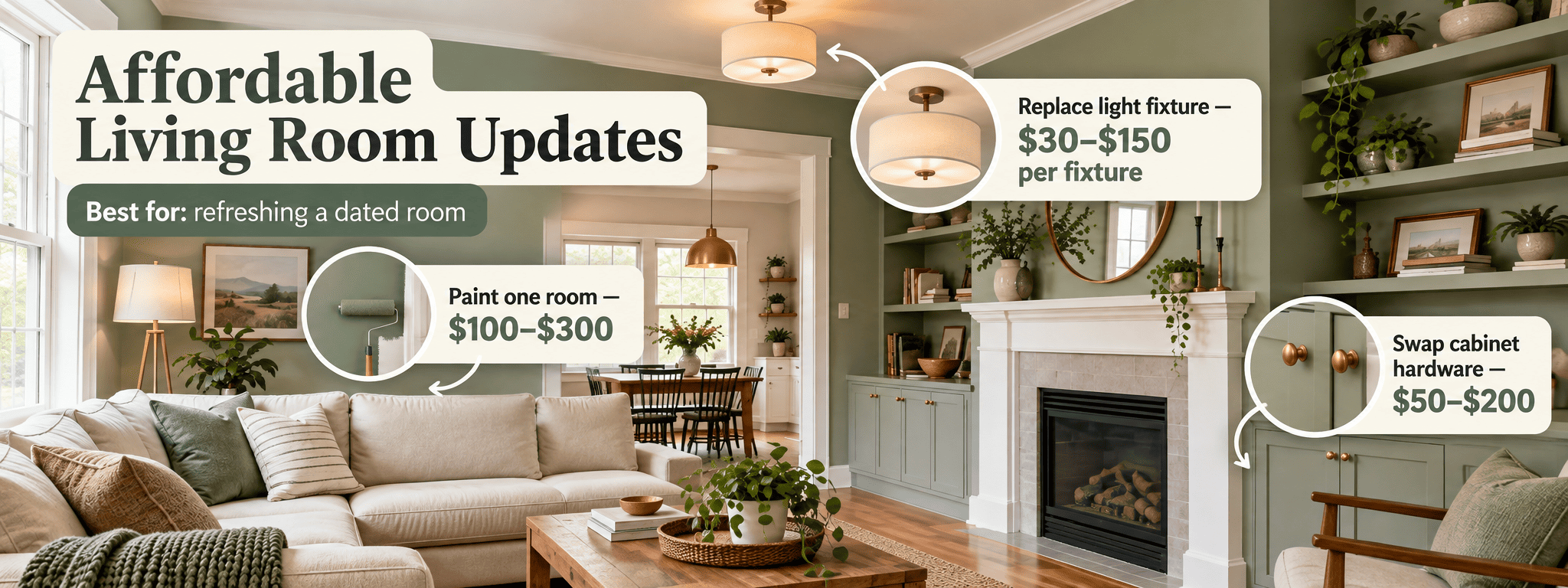
| Paint one room | $100–$300 | 1–2 days | Easy | Refreshing a dated room |
| Swap cabinet hardware | $50–$200 | 1–2 hours | Easy | Dated kitchens and baths |
| Replace light fixtures | $30–$150 per fixture | 1–2 hours each | Moderate | Dark rooms and old fixtures |
| Recaulk tubs and sinks | $15–$40 | 1–2 hours plus cure time | Easy | Moldy or cracked seams |
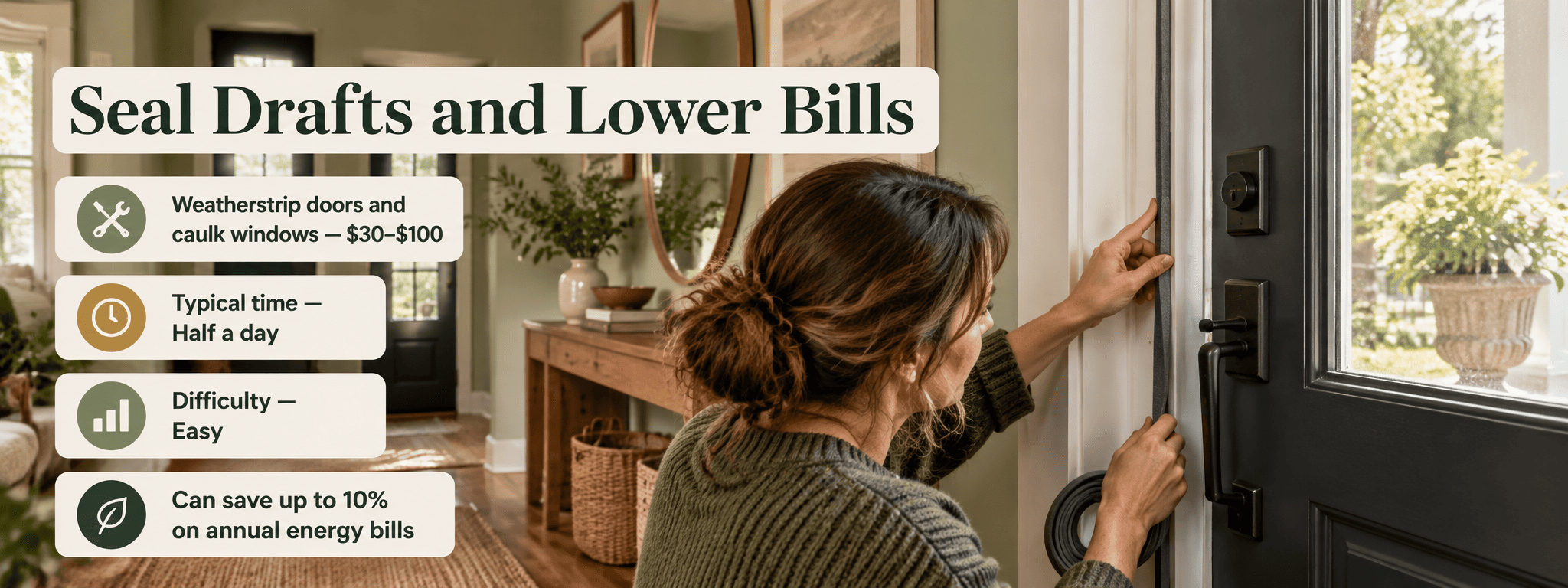
| Weatherstrip doors, caulk windows | $30–$100 | Half a day | Easy | Drafty rooms, high bills |
| Faucet aerators and low-flow showerhead | $5–$50 | Under 30 minutes | Easy | Lowering water bills |
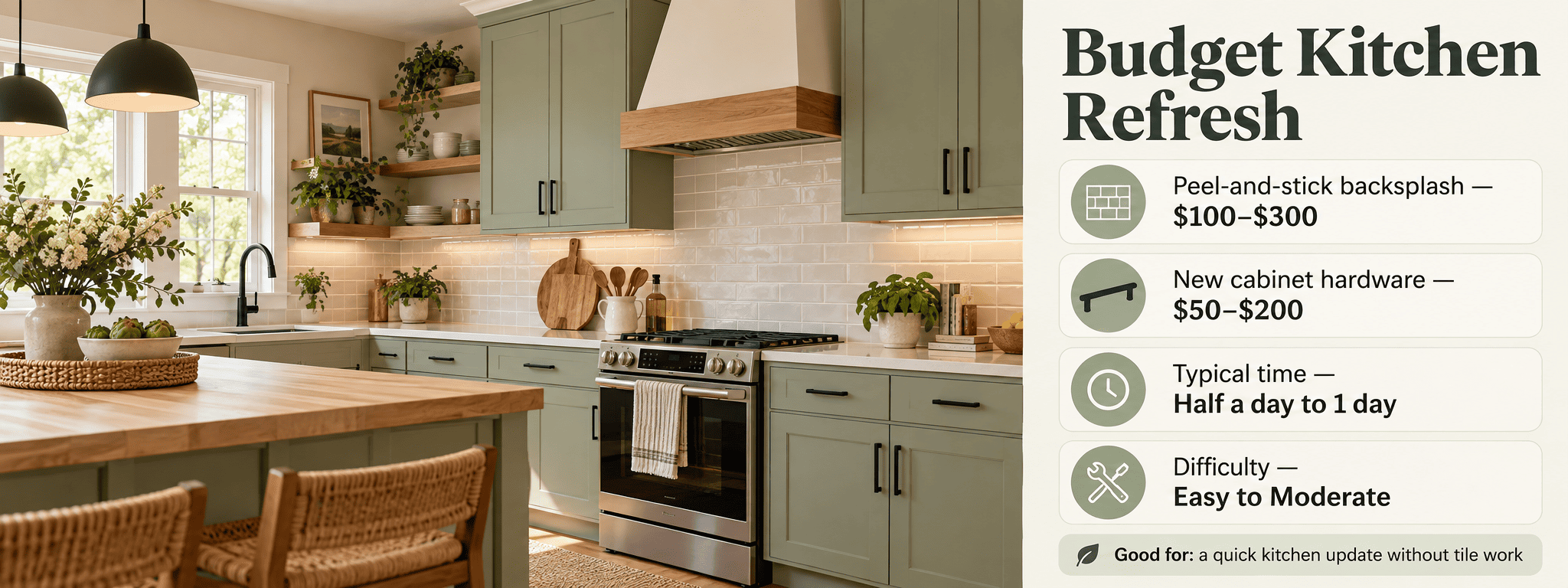
| Peel-and-stick backsplash | $100–$300 | Half a day | Easy–moderate | Kitchen refresh without tile work |
| Front door paint and house numbers | $50–$150 | Half a day plus drying | Easy | Curb appeal |
Paint walls, doors, and trim
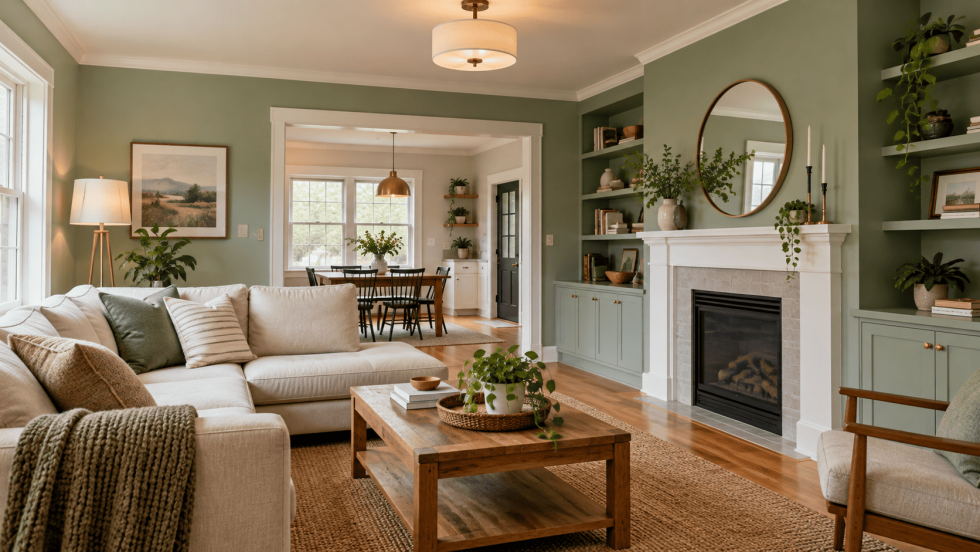
Paint is one of the least expensive ways to change how a room feels. A gallon typically covers about 350–400 square feet, so one room often needs just two gallons plus primer. Our guide on how to paint a room for a great finish walks you through prep, cutting in, and rolling.
Safety: If your home was built before 1978, test old paint for lead before you sand or scrape it.
Update hardware and lighting
New cabinet pulls, switch plates, and light fixtures modernize a room in an afternoon. Swapping a fixture for a similar one is a common DIY task. Turn off the breaker and confirm the power is off with a non-contact voltage tester before you touch any wires.
Seal drafts and cut energy bills
Weatherstripping doors and caulking windows costs very little and makes rooms more comfortable. ENERGY STAR says sealing air leaks and adding insulation can save up to 10% on your annual energy bills.
Save water with low-cost fixtures
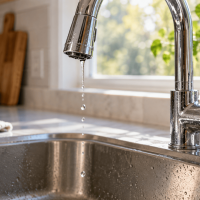
A new faucet aerator screws on by hand and can cost just a few dollars. According to the EPA, swapping old faucets and aerators for WaterSense labeled models can save the average family 700 gallons of water a year.
Refresh the kitchen and bath
Peel-and-stick backsplash, new grout, fresh caulk, and updated hardware can make a kitchen or bathroom feel remodeled for a few hundred dollars. For more room-by-room projects, see our list of home remodeling ideas under $1,000.
Boost curb appeal
Curb appeal on a budget is mostly paint and small hardware. Paint the front door, add new house numbers and a mailbox, and refresh flower beds with fresh mulch. Together, these can make the whole house look cared for, often for less than $250.
What Affects the Cost of Budget Upgrades?
The cost of a budget upgrade depends mostly on the size of the space, material quality, what’s hiding underneath, the tools you own, and whether you pay for labor. Each factor moves the price in its own way:
- Size of the space. A powder room needs a fraction of the paint and materials a living room does.
- Material quality. Premium paint, solid brass hardware, and designer fixtures can double the price of the same upgrade.
- Condition underneath. Water damage, rotted trim, or old wiring turn a cosmetic job into a repair.
- Tools you already own. Buying or renting a ladder, drill, or caulk gun adds to the first project, not the next ones.
- Labor. Hiring out even small jobs adds labor costs, which vary widely by region.
How to Stretch Your Budget Further
You can stretch a small budget by grouping paid work, doing the labor-light parts yourself, and timing your purchases:
- Bundle small jobs. Save a list of small repairs for a single handyman visit instead of paying separate trip charges.
- Do the prep yourself. Moving furniture, removing old hardware, and cleaning up afterward cut labor hours.
- Shop off-season. Buy outdoor materials in fall and watch for holiday sales on paint and tools.
- Compare quotes. Ask two or three pros to quote the same list of work in writing, so you can compare them line by line.
- Check for rebates. Many utilities offer rebates on water-saving fixtures and insulation.
Pro tip: Buy a sample quart before committing to gallons of paint. A sample costs a few dollars, while repainting a room in a color you don’t love costs another weekend and another gallon or two.
DIY or Hire a Pro?
Good DIY project if…
- It’s cosmetic: paint, hardware, caulk, or peel-and-stick
- You’re replacing a fixture with a similar one on existing wiring
- The work is at ground level or on a short step ladder
- A mistake would be cheap and easy to redo
Call a pro if…
- The job needs new wiring, plumbing lines, or a permit
- It involves roof work or tall ladders
- Old paint in a pre-1978 home needs sanding or scraping
- You’d need to buy or rent expensive tools for one project
- You have a long list of small repairs and no free weekends
Handymen charge either by the hour or by the project, according to the HireRush handyman cost guide. One visit for several small jobs usually costs less per task than separate calls.
Common Mistakes to Avoid
- Decorating before repairing. New paint over a leak stain comes back within weeks.
- Buying the cheapest materials. Bargain paint often needs extra coats, and cheap caulk cracks sooner.
- Skipping the cushion. Small projects uncover surprises. Keep 10–20% in reserve.
- Starting too many projects at once. Finish one room before you open the next.
- Taking on work beyond your skills. Redoing a failed DIY job often costs more than hiring a pro the first time.
Final Thoughts
Home improvement on a budget follows a simple order. Fix problems before they grow, then add upgrades that cut your bills, and finish with paint, hardware, and lighting.
Most of these upgrades are easy weekend DIY projects. Leave wiring, plumbing, permits, heights, and lead paint to professionals, and hand a list of small jobs to a handyman when time is short.