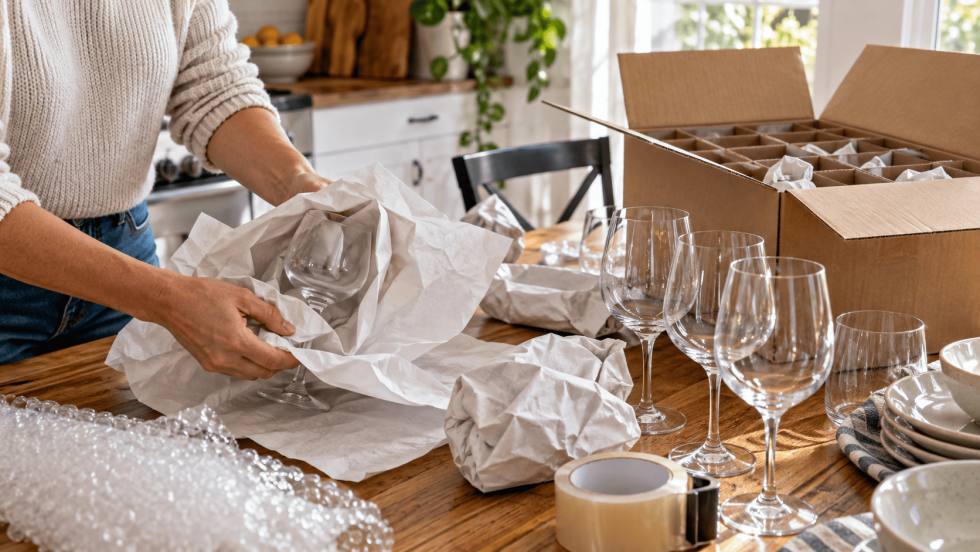
You lift a moving box on unpacking day and hear glass shift inside. Drinking glasses, wine stems, and glass vases break easily in transit, and the rim and stem take most of the damage.
Knowing how to pack glassware for moving takes the right supplies and a little patience. The sections below cover which materials to use, how to wrap glasses, stemware, and mugs, and how to fill and label boxes. The last part explains how to keep fragile boxes safe on the truck.
What’s the Best Way to Pack Glassware?
Quick answer: Wrap each glass individually in clean packing paper, stuff the inside, and add bubble wrap for stemware and crystal. Pack glasses upright in a sturdy, small box with cell dividers and a cushioned bottom and top. Fill every gap so nothing moves, then seal and label the box “Fragile – Glass – This Side Up.”
| Item | How to wrap | How to place it | Extra tip |
|---|---|---|---|
| Tumblers | Stuff with paper, wrap in 2-3 sheets | Upright in cell dividers | Never nest glasses inside each other |
| Wine glasses and stemware | Wrap the stem first, then the bowl, then the whole glass | Upright on the top layer, above heavier glassware | Add bubble wrap around the bowl |
| Mugs | Wrap the handle separately, then the whole mug | Upright or on their side on the top layer | Mugs are sturdier, so use them to fill space |
| Glass plates and bowls | Wrap each one separately | On edge, like records | Never stack plates flat |
| Vases | Stuff the inside, then wrap in bubble wrap | Alone or in a snug small box | Fill the box completely with padding |
Supplies You’ll Need
The right materials do most of the work. Gather these before you start:
- Packing paper (unprinted, since newspaper ink rubs off on glass)
- Bubble wrap for stemware, crystal, and vases
- Small or medium boxes, or dish pack boxes with cell dividers
- Packing tape and a tape gun
- Markers and “Fragile” labels
- Towels, dish cloths, or clean socks for extra padding
Pro tip: Liquor stores often give away sturdy boxes with built-in dividers. They’re made to carry bottles, so they’re sized perfectly for glasses.
How to Pack Glassware for Moving, Step by Step
Step 1: Prepare the box
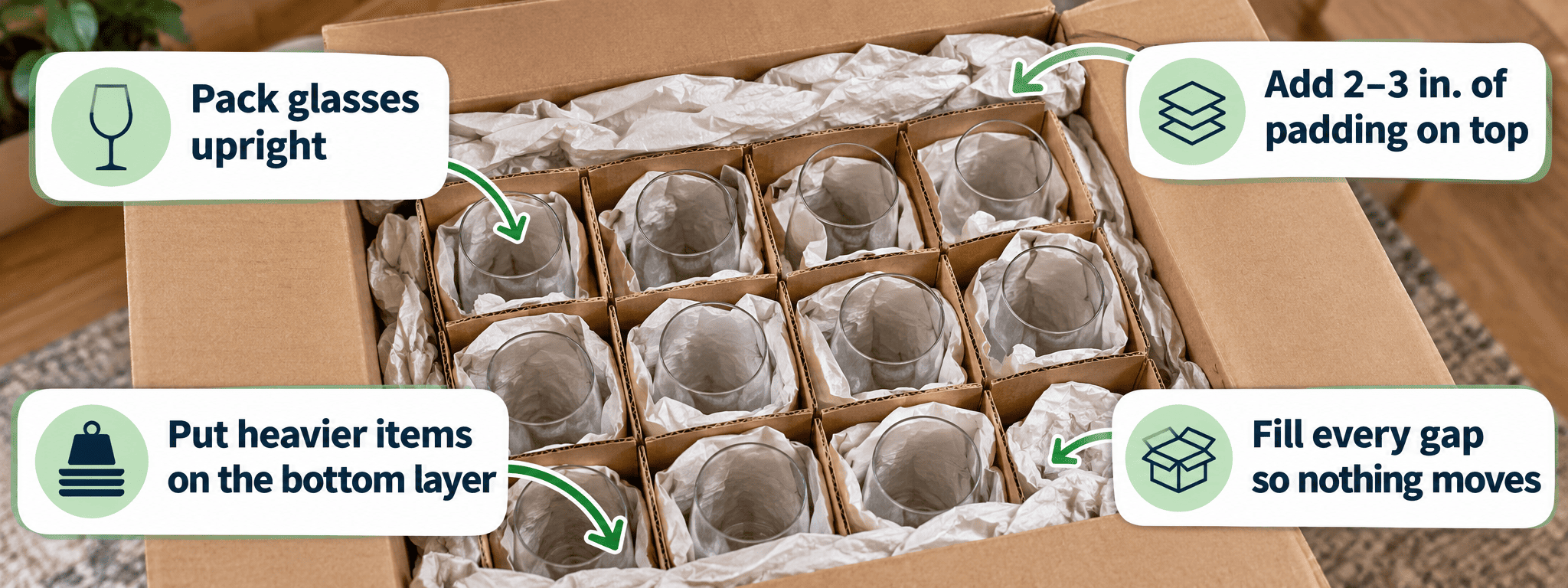
Tape the bottom seams of the box twice, with a strip across the center and along each edge. Add a 2-3 inch layer of crumpled packing paper or a folded towel on the bottom to absorb shocks.
Step 2: Stuff and wrap each piece
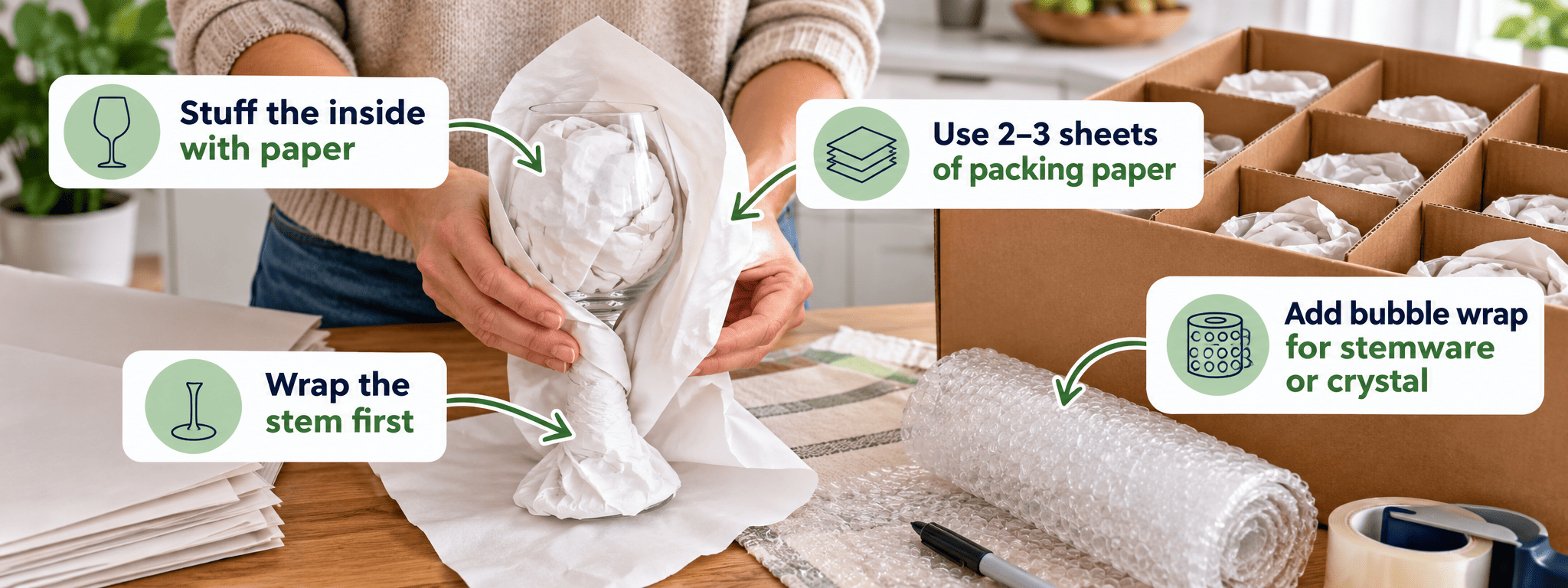
Crumple a sheet of paper and push it gently into the glass. Place the glass on a corner of a stack of paper and roll it diagonally, tucking in the edges as you go. Use two or three sheets per glass and secure the bundle with a small piece of tape.
Step 3: Load the heaviest items first
Put the heaviest, sturdiest pieces, like pitchers and glass bowls, on the bottom layer. Place wrapped glasses upright in the cell dividers. Rims and stems are the weakest parts, so avoid laying glasses on their sides.
Step 4: Fill every gap
Stuff crumpled paper, dish towels, or socks into any empty space. Close the flaps and gently shake the box. If you hear clinking or feel movement, open it and add more padding.
Step 5: Add a top layer and seal
Add another 2-3 inch layer of padding on top so the box closes flat without pressing on the glasses. Seal the top with packing tape along every seam.
Step 6: Label clearly
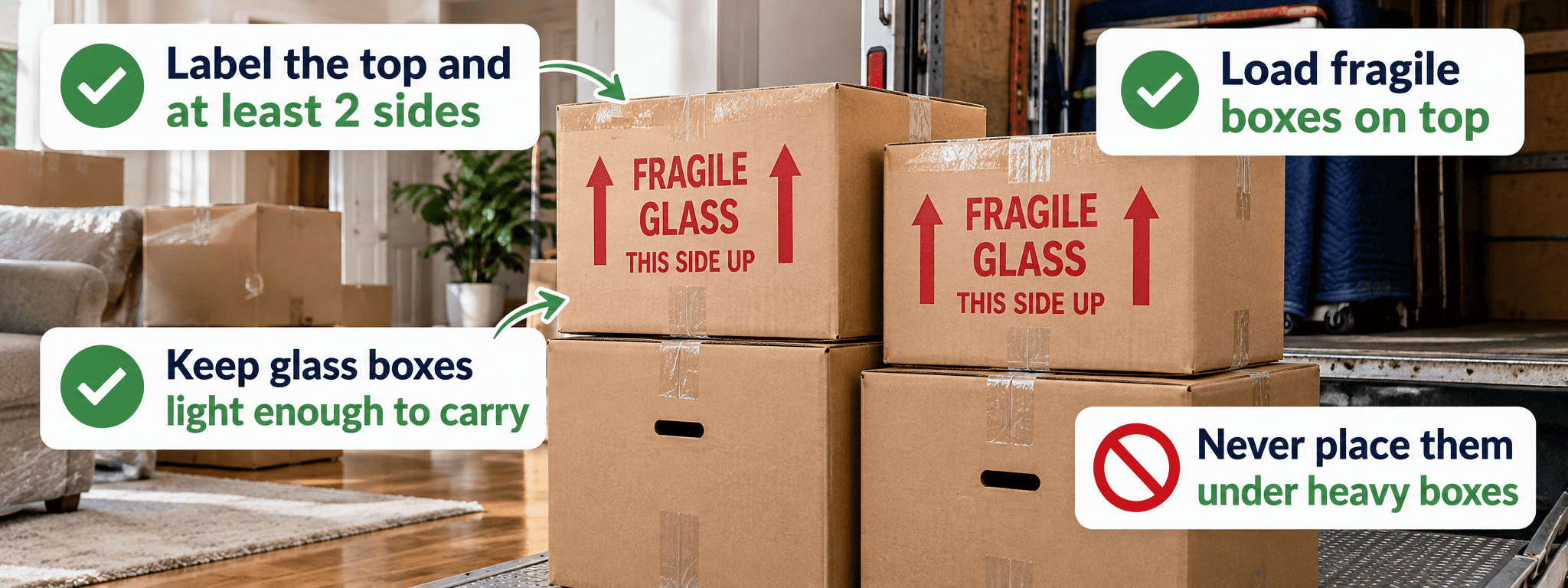
Write “Fragile – Glass – This Side Up” on at least two sides and the top, and add arrows showing which way is up. Include the room name so the box goes straight to the kitchen or dining room.
Safety: Keep glass boxes light enough to carry comfortably. A heavy box of glass is more likely to be dropped, and broken glass inside a box can cut your hands when you unpack.
How to Wrap Glasses for Moving: Stemware, Crystal, and Mugs
Different glassware needs slightly different handling:
- Stemware: Wrap a small strip of paper or bubble wrap around the stem first, since it’s the most likely part to snap. Then stuff and wrap the bowl, and finally wrap the whole glass.
- Crystal: Crystal is heavier and more expensive to replace. Add a full layer of bubble wrap over the paper, and pack fewer pieces per box.
- Mugs: Wrap the handle first with a small piece of paper, then the whole mug. Mugs make good gap-fillers on the top layer.
- Glass decor and frames: Tape an X across frame glass to hold pieces together if it cracks, then wrap in bubble wrap and pack on edge.
How to Pack Glasses for Moving When You’re Short on Time
If moving day is close, speed up the process without skipping protection:
- Use glass pack kits. Boxes with pre-cut dividers and foam pouches let you slide glasses in without wrapping each one in paper.
- Set up a packing station. Put paper, tape, and boxes on one cleared counter so you’re not searching for supplies.
- Pack in batches. Wrap all the tumblers, then all the stemware, so you get faster with each piece.
- Keep one box open. Leave out a few glasses and mugs for the last days, and pack them in a final labeled box.
When you unpack, work over a towel or soft surface. Check every sheet of paper before you throw it away, since small glasses easily hide inside a crumpled wrap.
Budget-Friendly Packing Alternatives
You don’t need to buy every supply new. Clean socks slide easily over tumblers, and towels, T-shirts, and linens make great padding. Using them also means fewer boxes of soft items to pack separately.
Ask local grocery and liquor stores for free boxes, and look for used boxes and packing paper on neighborhood groups. For more ways to save time and space, see our packing and moving tips.
Protect Fragile Items During the Move
Even perfectly packed glass can break if the box is loaded badly. Put glassware boxes on top of heavier, sturdier boxes, never underneath them. Our guide on how to pack a moving truck explains how to load fragile items safely.
If you hire interstate movers, understand their liability. The FMCSA explains that under Released Value protection, movers are responsible for no more than 60 cents per pound per article. It also notes that damage claims can be harder to prove for boxes you pack yourself.
The FMCSA’s moving tips also recommend watching the loading and unloading of your belongings. Carry irreplaceable heirlooms in your own car.
DIY or Hire a Pro?
Good DIY project if…
- You have a small collection of everyday glasses and dishes
- You have a week or more before moving day
- Most pieces are inexpensive and easy to replace
Call a pro if…
- You own crystal, heirloom glassware, or art glass
- You have a large collection and little time
- You want the mover to be clearly responsible for packing-related damage
- You’re moving long distance, where boxes are handled more often
Professional packers bring dish pack boxes and bubble wrap, and they wrap fragile items every working day. Check local prices in the HireRush moving cost guide before you book.
Common Mistakes to Avoid
- Using newspaper. Ink can transfer onto glass and is hard to wash off.
- Nesting glasses. Glasses stacked inside each other can crack under pressure.
- Packing boxes too big. Large boxes of glass get heavy and are easy to drop.
- Leaving empty space. Any movement inside the box causes chips and cracks.
- Laying stemware flat. Long stems snap easily when they carry weight sideways.
- Skipping labels. Unmarked glass boxes end up at the bottom of a stack.
Final Thoughts
Knowing how to pack glassware for moving means following three rules: wrap every piece individually, pack upright in small, well-padded boxes, and fill every gap. Label boxes clearly and load them on top of heavier, sturdier boxes.
Handle everyday glasses yourself with paper, towels, and divided boxes. For crystal, heirlooms, or a large collection, professional packers can save time and make damage claims easier.