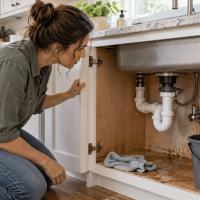
You finally have the keys. Then the boxes pile up in the living room, the internet isn’t on yet, and you can’t find a single towel.
Moving into a new apartment goes much smoother when you know what to do first. The plan below runs in order: what to arrange before move-in day, how to inspect the unit before you unpack, and what to handle on your first night. It ends with your first week, so you keep both your deposit and your sanity.
What to Do When Moving Into a New Apartment
Quick answer: Set up utilities and internet before you arrive, and forward your mail. On move-in day, photograph the unit’s condition, test smoke alarms and appliances, clean before placing furniture, and unpack a first-night box. During the first week, finish unpacking the kitchen and bathroom and update your address everywhere.
| When | What to do | Why it matters |
|---|---|---|
| 1–2 weeks before | Set up electricity, internet, and renters insurance; forward mail | Avoids a dark, offline first night |
| Move-in day, before unloading | Photograph every room and note damage | Protects your security deposit |
| Move-in day | Test alarms, locks, water, and appliances | Catches problems while the landlord is responsible |
| First night | Unpack the bed, bathroom kit, and phone chargers | Lets you rest and get ready for the next day |
| First week | Unpack the kitchen, update your address, meet the building staff | Gets daily life running |
| First month | Decorate, organize storage, finish small fixes | Makes the space feel like home |
Before Moving Into an Apartment: Prep Checklist
Most first-week headaches come from things you can arrange before you arrive:
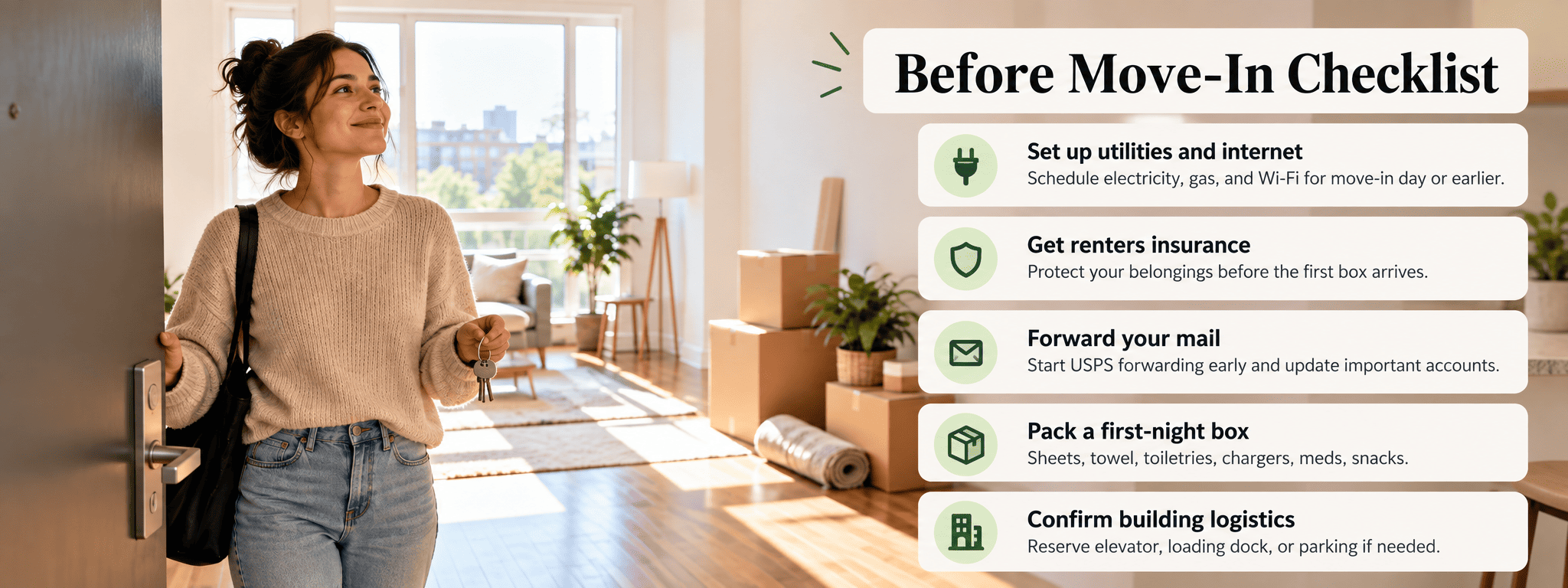
- Confirm move-in details. Ask when you can pick up keys and whether you need to reserve an elevator, loading dock, or parking spot.
- Set up utilities. Schedule electricity, gas, and internet to start on or before move-in day. Depending on the provider, the first open internet installation slot can be days or weeks away.
- Get renters insurance. Check whether your lease requires it. A policy typically covers your belongings against theft, fire, and some types of water damage.
- Forward your mail. USPS notes that mail forwarding can start within 3 business days, but recommends allowing up to 2 weeks.
- Pack a first-night box. Include sheets, a towel, toiletries, medications, chargers, toilet paper, a few tools, snacks, and a change of clothes.
Pro tip: Label the first-night box clearly and carry it in your own car. That way it doesn’t end up at the back of the moving truck.
Move-In Day: Inspect Before You Unpack
Step 1: Document the apartment’s condition
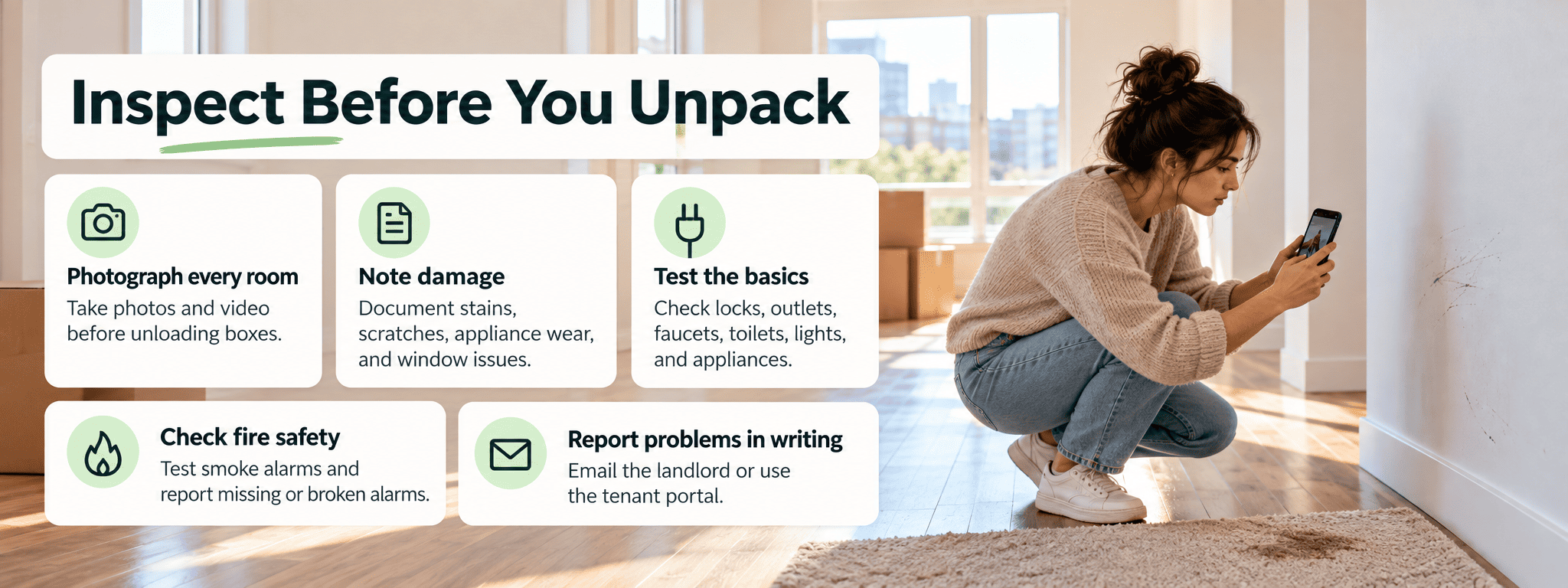
Before a single box comes in, walk through every room with your phone. Take photos and video of walls, floors, carpets, appliances, windows, and fixtures, and zoom in on any stains, scratches, or damage. Fill out the landlord’s move-in checklist if you get one, and send a copy of your notes in writing.
Step 2: Test everything
Run every faucet and shower, flush the toilets, and check under sinks for leaks. Turn on the stove, oven, fridge, dishwasher, heating, and air conditioning. Plug a phone charger into outlets in each room, and test every door and window lock.
Step 3: Check fire safety
Press the test button on each smoke alarm. The NFPA recommends testing smoke alarms monthly and replacing any alarm that is 10 years old or more. Find the nearest exits and fire extinguisher, and report any missing or broken alarms to your landlord right away.
Step 4: Clean before furniture goes in
Empty rooms are much easier to clean. Wipe down cabinets, shelves, the fridge, and bathroom surfaces, and vacuum or mop the floors before the movers bring in large items. A new shower curtain liner and toilet seat are cheap upgrades that make the bathroom feel truly yours.
Step 5: Place big furniture first
Direct movers to put the bed, sofa, dressers, and tables in their final spots. Moving heavy pieces yourself later is harder and risks scratching floors.
Stick felt pads under furniture legs before setting pieces down. Lay a runner or cardboard along the main path from the door to protect floors while boxes come in.
Your First Night and First Week
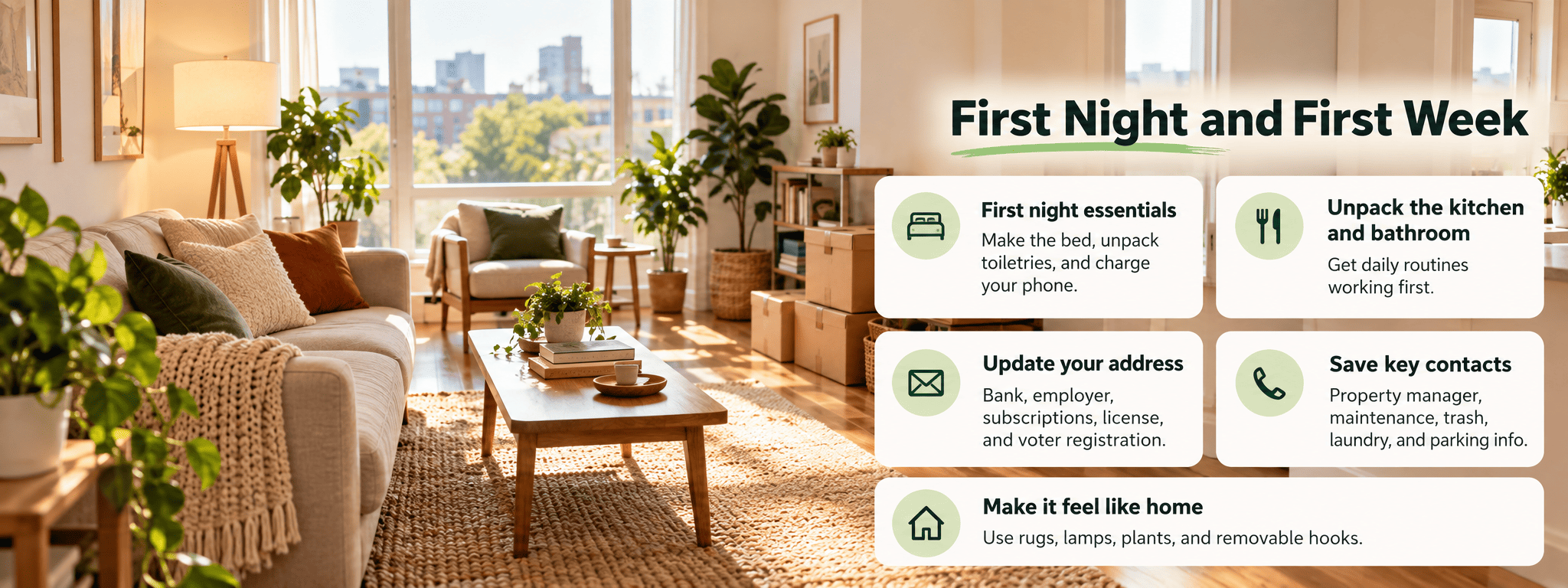
On the first night, focus on three things: a made bed, a working bathroom, and charged phones. Everything else can wait until morning.
During the first week, work through the rest in a logical order:
- Unpack the kitchen and bathroom first. These rooms make daily life work.
- Learn the building basics. Find the breaker panel, water shutoff, trash and recycling rules, and laundry room.
- Meet the building staff. Save the contact information for the property manager and maintenance requests.
- Update your address everywhere. Mail forwarding doesn’t update your bank, employer, driver’s license, voter registration, or subscriptions.
- Report problems in writing. Send maintenance requests by email or through the tenant portal so you have a record.
Not sure what you still need to buy? Our list of necessities for a new apartment covers every room.
Get to Know Your New Neighborhood
During your first weekend, find the stores and clinics you’ll need, test your commute, and sort out parking and official records:
- Find the everyday stops. Locate the nearest grocery store, pharmacy, hardware store, and urgent care clinic.
- Plan your commute. Try your route to work or school at rush hour before your first real day.
- Sort out parking. Ask whether your building or street requires a parking permit or guest passes.
- Update official records. If you moved to a new state, check the deadline to update your driver’s license and car registration, and register to vote at your new address.
- Set up local services. Find a doctor, dentist, and veterinarian near your new home before you need one.
Make Your New Place Feel Like Home
Rugs, lamps, curtains, and plants warm up a bare rental quickly once the boxes are gone. Removable hooks and strips let you hang art without damaging the walls.
Check your lease before painting, mounting a TV, or replacing fixtures, since many landlords require approval. Moving to a new city? Our guide on finding home services when moving to a new city helps you find local pros fast.
Pro tip: Keep a small folder for your lease, move-in photos, and maintenance emails. It makes getting your deposit back much easier when you move out.
DIY or Hire a Pro?
Good DIY project if…
- You’re moving a studio or one-bedroom with few large items
- The building has an elevator or you’re on the ground floor
- Friends can help, and you can rent a truck for the day
Call a pro if…
- You have heavy furniture, many stairs, or tight hallways
- You’re moving long distance or on a tight schedule
- The building requires movers with insurance certificates
- You don’t have time to clean the new place before moving in
If you’d rather walk into a spotless apartment, book move-in house cleaning before your furniture arrives.
Common Mistakes to Avoid
- Skipping the move-in photos. Without proof, you may be charged for damage you didn’t cause.
- Waiting to set up internet. Installation slots can be booked up for days or weeks.
- Burying the first-night box. If it ends up behind 40 other boxes, your first night will be rough.
- Ignoring small problems. A slow leak or broken lock should be reported in writing right away.
- Forgetting renters insurance. The landlord’s policy usually doesn’t cover your belongings.
- Changing things without permission. Painting or drilling without approval can cost you part of your deposit.
Final Thoughts
Moving into a new apartment is easier when you plan ahead. Set up utilities, insurance, and mail forwarding before you arrive, and document the apartment’s condition before you unpack.
Test alarms and appliances on day one, then focus on the bed, bathroom, and kitchen. Update your address everywhere, report problems in writing, and bring in movers or cleaners when the job is bigger than your time allows.