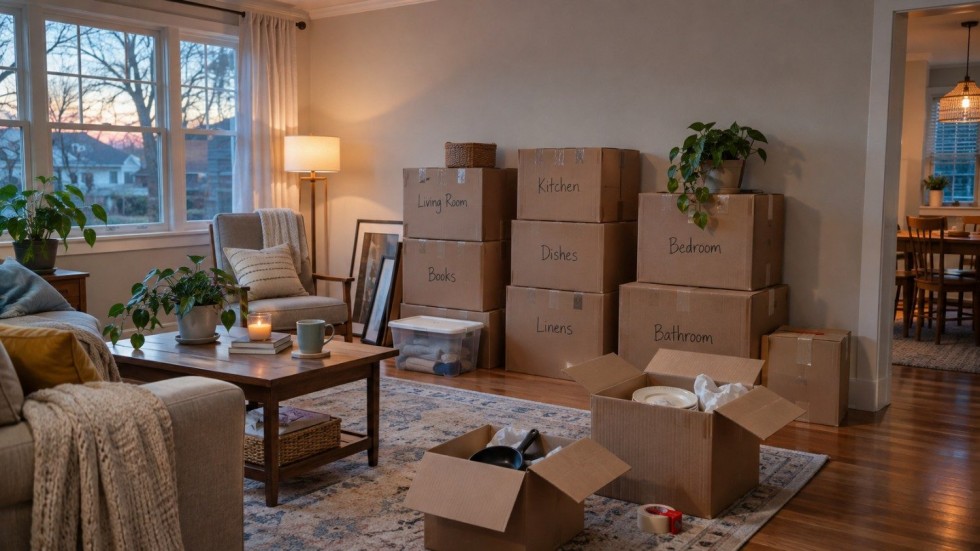
The truck pulls away at 6 p.m., and every room is a wall of cardboard. The beds are buried, the coffee maker is somewhere, and the pizza box on the floor is tonight’s kitchen.
Before you tear into the nearest box, a plan saves you days. This guide covers how to unpack after moving in the right order: what to open on night one, how to check for damage before you sign, and how long the job really takes. You will also see when to hire help.
What Should You Unpack First After Moving?
Quick answer: Open the essentials box first, then set up beds and the bathroom so you can sleep and shower on night one. Next come kitchen basics, then kids’ and pet areas, the living room and office, closets and laundry, and last the decor, books, garage, and storage.
Unpacking Timeline: From First Night to Fully Settled
Unpacking moves in phases, not one marathon weekend. Stage every box in its room before you open anything, then work outward from the rooms you use daily. The table below shows when each phase lands.
| Phase | When | Rooms / tasks | Done when… |
|---|---|---|---|
| Before boxes come in | Moving day, before unloading | Label doors, place furniture, set staging corners | Every box lands in its room |
| Night 1 | First evening | Essentials box, beds, bathroom | You can sleep and shower |
| Days 1-3 | First weekend | Kitchen basics, kids and pets, router | You can cook and work |
| Week 1 | Days 4-7 | Living room, office, closets | Daily-use rooms are done |
| Weeks 2-4+ | After that | Decor, books, storage, garage | No unopened boxes left |
Treat the phases as a working order, not a rigid calendar. With extra hands or free time, you can pull the living room forward a few days.
What to Prepare Before You Open a Single Box
Three things decide how fast unpacking goes: a stocked essentials box, the right supplies, and boxes parked in the correct rooms.
Your essentials box
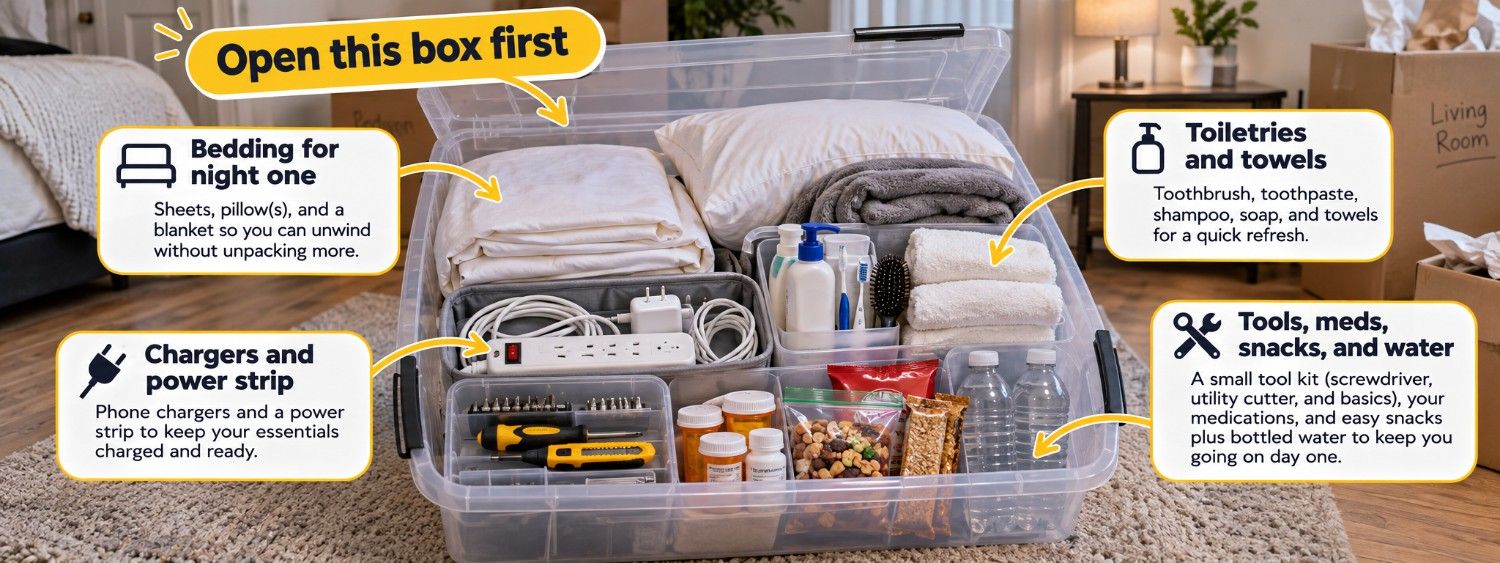
Keep one box or clear tote that you open first, whatever room it lands in. Stock it with:
- A sheet set, pillows, and a light blanket for each bed
- Towels, toilet paper, soap, and a shower curtain liner
- Medications, phone chargers, and a power strip
- Screwdrivers, hex keys, a utility knife, and a tape measure
- A flashlight, trash bags, paper towels, and cleaning wipes
- A change of clothes, snacks, and water
- Diapers, formula, a favorite toy, pet food, and a leash
Unpacking supplies
Gather these before the first box opens: a safety cutter, trash bags, a marker and sticky notes, cleaning wipes, a step stool or ladder, basic tools, anti-tip kits, a stud finder, and a hand truck or dolly. A utility knife plus flathead and Phillips screwdrivers cover most furniture assembly.
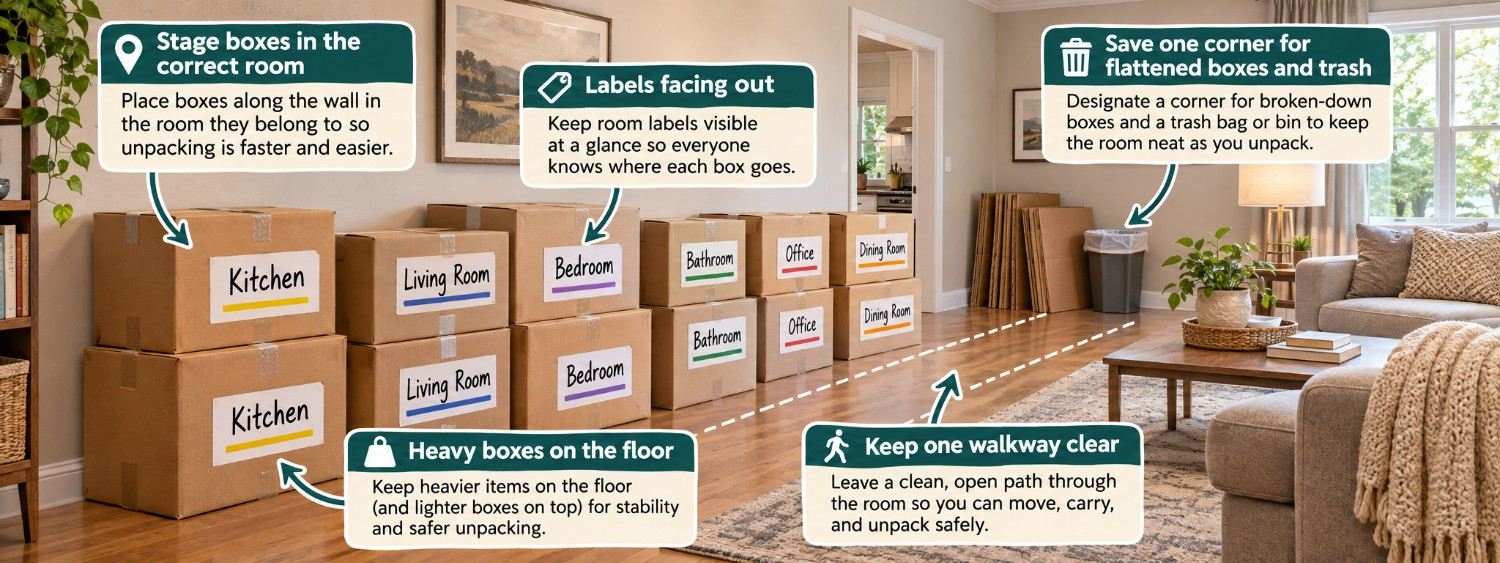
Stage boxes in the right rooms
Mark each door with the room name or a color so helpers know where boxes go. Set furniture in place first, then line boxes along the walls with labels facing out and heavy boxes on the floor. Keep one corner free for trash and flattened empties.
Pro tip: Build a first-week box with tools, sticky notes, a marker, and trash bags, and keep it near where you are working. You will reach for it in every room.
How to Unpack After Moving, Room by Room
Work room by room, finishing one box before opening the next. The order below protects fragile items, keeps walkways clear, and gives you a livable home on the first night.
Step 1: Check deliveries for damage before you sign
Match the box count against the inventory list the crew hands you, and note anything crushed, torn, or missing before you sign. Photograph each damaged box and keep the images.
For interstate moves, file a written claim with the mover within 9 months of delivery, per the FMCSA moving problems guide. Local moves follow state rules, so check your contract for its claim window.
Under Released Value Protection, the FMCSA default on many moves, liability is capped near 60 cents per pound per item. Full Value Protection covers repair or replacement instead.
Step 2: Set up beds and the bathroom
Assemble bed frames first, then make each bed with the sheets and pillows from your essentials box. In the bathroom, hang the shower curtain liner, unroll the bath mat, and put out towels and toiletries. Ending the night with a made bed and a working shower is the biggest win of moving day.
Step 3: Unpack the kitchen essentials
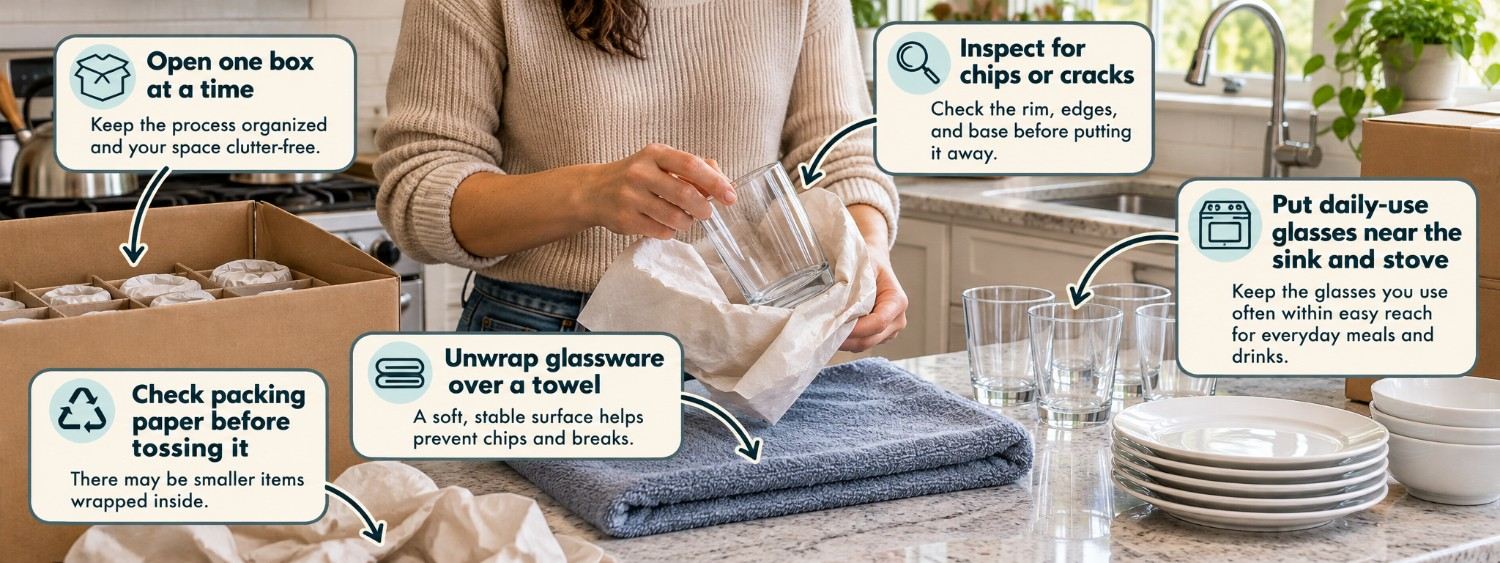
Set up the items you use daily first: plates, glasses, a pot, a pan, and the coffee maker. Keep food and utensils in the cabinets nearest the sink and stove.
Unwrap glassware over a folded towel and check the packing paper before you toss it, since small parts hide there. If anything looks brittle, review how glassware should be packed before you unwrap the rest.
Step 4: Set up kids’ rooms and pet areas
Build cribs and beds first, then unpack toys and clothes where kids can reach them. Anchor dressers, bookcases, and shelving to wall studs right away, and keep pets in a quiet room with food, water, and a familiar blanket.
The Anchor It campaign from CPSC recommends anti-tip straps on dressers and TVs. That matters for climbing toddlers and for pets that scale furniture.
Step 5: Living room and home office
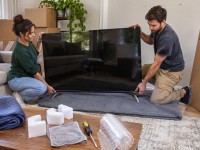
Mount or anchor the TV before you plug in anything, using a stud finder to locate framing. Connect the router early so work and school schedules survive the move. Remote workers should set up the desk and monitor in the first pass, then leave decor for later.
Step 6: Closets, laundry and storage
Hang clothes by category and pack off-season items into the boxes you kept. Before the first wash, remove the transit bolts from the washer, which lock the drum and can damage it if left in. If the hookups look unfamiliar, follow our steps for reconnecting a washer and dryer.
Step 7: Break down boxes as you go
Flatten each empty box as soon as its contents are out and stack cardboard in one spot. Check your local recycling program for curbside rules, since many towns limit how much cardboard they collect at once. Keep three or four sturdy boxes for storage and future moves.
Pro tip: Set a “decide later” bin in every room. When you hit an item with no clear home, drop it in and keep moving; sort those bins once the daily rooms are done.
How Long Does It Take to Unpack After Moving?
Most people make a 1-2 bedroom home livable in 1-2 days and finish unpacking in 1-3 weeks. Larger homes take a month or more, and the difference depends on how much you own and how many helpers you have.
These are typical ranges for one or two adults working evenings and weekends, so your timeline will vary by home size:
- Studio or 1 bedroom: livable the same day (3-5 hours), mostly unpacked in 2-4 days, fully done in 1-2 weeks
- 2 bedrooms: livable in 1-2 days, mostly unpacked in about 1 week, fully done in 2-3 weeks
- 3 bedrooms: livable in about 2 days, mostly unpacked in 1-2 weeks, fully done in 3-6 weeks
- 4+ bedrooms with a garage: livable in 2-3 days, mostly unpacked in 2-3 weeks, fully done in 1-2 months or more
What speeds it up or slows it down
Several factors change the pace: how much you own, how well boxes were labeled, whether you decluttered before the move, and how many people help. Young children, a demanding work schedule, and flat-pack furniture slow things down, while a pre-labeled home and hired help speed them up.
A long-distance move adds time, because the truck may arrive a few days after you do. Small jobs for a handyman, such as hanging shelves or mounting a TV, can wait without blocking the unpacking work.
A practical daily target is one to two rooms, or 10 to 20 boxes, but treat that as a guide rather than a deadline.
Unpacking After a Move Safely
Unpacking is a mix of lifting, cutting, and reaching, and a few habits prevent most injuries.
- Lift with the box hugged close to your chest, bend at the knees, and turn with your feet rather than twisting. Bring in a partner for heavy or awkward boxes and use a dolly when you can.
- Open boxes with a shallow cut along the tape seam, moving the blade away from your body. Retract the blade after each cut and keep cutters out of children’s reach.
- Anchor dressers, bookcases, and TVs to the wall as you set them down, not after the room is finished.
Safety: Have a licensed plumber or the gas utility connect a gas range or gas dryer. Never connect a gas line yourself.
Keep large appliances on wall outlets rather than chained power strips, since overloaded strips can overheat.
DIY or Hire a Pro?
Unpacking is mostly labor and sorting, so many households handle it themselves. Hire help when the clock matters or the lifting is too much.
Good DIY project if…
- Your home is small and you have a few free weekends.
- Friends or family can help with the heavy pieces.
- You own few fragile or high-value items.
Call a pro if…
- The house is large or you have a hard move-in deadline.
- You have limited mobility or heavy furniture that needs assembly.
- Someone must wall-mount a TV or connect gas appliances.
- You own a lot of glassware, art, or electronics.
- You have no helpers, or you moved interstate and want the crew to unpack and document damage on the spot.
The rule: unpack the daily rooms yourself, and pay for help with the heavy, fragile, or technical pieces.
Packers and unpackers charge by the hour, usually somewhere near $30 to $50 per mover depending on the region, so see our moving cost guide before you book; rates depend on your area.
Common Mistakes to Avoid
Small missteps turn a two-day job into a two-week pile of cardboard. Watch for these five.
- Opening every box at once leaves rooms half-finished; close out one box before starting the next.
- Signing the delivery receipt before a walk-through undercuts a later claim; note damage on the inventory first.
- Throwing out a damaged box before photographing it weakens a claim; shoot the item and the packaging first.
- Buying organizers before you know the space wastes money; lay items out, then buy bins that fit.
- Leaving dressers, bookcases, and TVs unanchored is a real tip-over risk; strap them while you place them.
Settle In One Room at a Time
Here is the short version of how to unpack after moving: essentials box first, then beds and the bathroom, then the rooms you use every day. Open one box at a time, check for damage before you sign, and anchor furniture as you place it.
Most homes feel livable within a day or two and are fully settled in a few weeks. When the house is large, the deadline is tight, or the load is fragile, a moving crew can carry the hard part.